
Enough of spreadsheets?

PAT keeps order, availability and plan in one flow, not in three spreadsheets.

hidden errors
94%
of spreadsheets contain errors.

Research on operational spreadsheets has reported that 94% of spreadsheets contain errors. If planning, availability and dispatch depend on spreadsheets, the risk of hidden mistakes rises fast as complexity increases.

Source: EuSpRIG
35%
of businesses lose money from spreadsheets.

A Quocirca study for IBM asked 100 directors of mid-sized companies. 35% said spreadsheet use has a marked detrimental effect on their company. Typical causes are duplicated data and inaccurate information.

Source: Quocirca / IBM, 2009
Example calculation
5 employees …working with spreadsheets every day to keep the nursery in sync
30 min a day …they spend checking availability and updating dispatch lists by hand
5 days a week …the same manual routine, repeated on every working day all year round
25 € per hour …average hourly cost of an employee spending this time on manual checks
+15,000 € a year
the cost
The hidden cost of spreadsheets.

Spreadsheets are great for lists. They are not built for connected workflows. In horticulture, planning, availability and dispatch influence each other every day. If data is fragmented, teams lose control exactly when accuracy matters most.

  • Data first, decisions later. Teams spend valuable time validating spreadsheets instead of focusing on what really matters.
  • Reactive instead of proactive. Without a single source of truth, dispatch becomes reactive and changes are managed under constant pressure.
  • Firefighting, not planning. Delivery commitments turn into stressful firefighting during busy periods.
Get a free demo
one place
From scattered sheets to one live system.

Planning, inventory, orders, purchasing and finance stop living in separate files. PAT brings them together in one database and sends the same live numbers to the office, the tablet on the move and the phone in the greenhouse. No copies, no version chaos.

Planning.xlsx
Inventory.xlsx
Orders.xlsx
Purchasing.xlsx
Finance.xlsx
Availability.xlsx
PAT Horticulture Software
Workstations
Tablets
Smartphones
From six files to one database

Planning, inventory, orders, purchasing and finance move into one central database. Your existing data comes along, so nobody starts from zero and nothing is typed in twice.

  • Existing spreadsheets imported
  • Duplicates and conflicts cleaned up
  • Old versions archived, never lost
One number, always current

Change one thing and everything connected follows in real time. There is one version of the truth, and no one has to ask which file is the latest.

  1. A new order comes in
  2. Availability updates instantly
  3. Planning adjusts the batches
  4. Dispatch knows what leaves when
Live on every device

Office and greenhouse work with the same live numbers, wherever the work happens.

OfficePlanning, sales and finance on the workstation
GreenhousePotting, spacing and stock counts on the tablet
On the floorScanning and dispatch right from the smartphone
a look ahead
Where this is going in 2027.

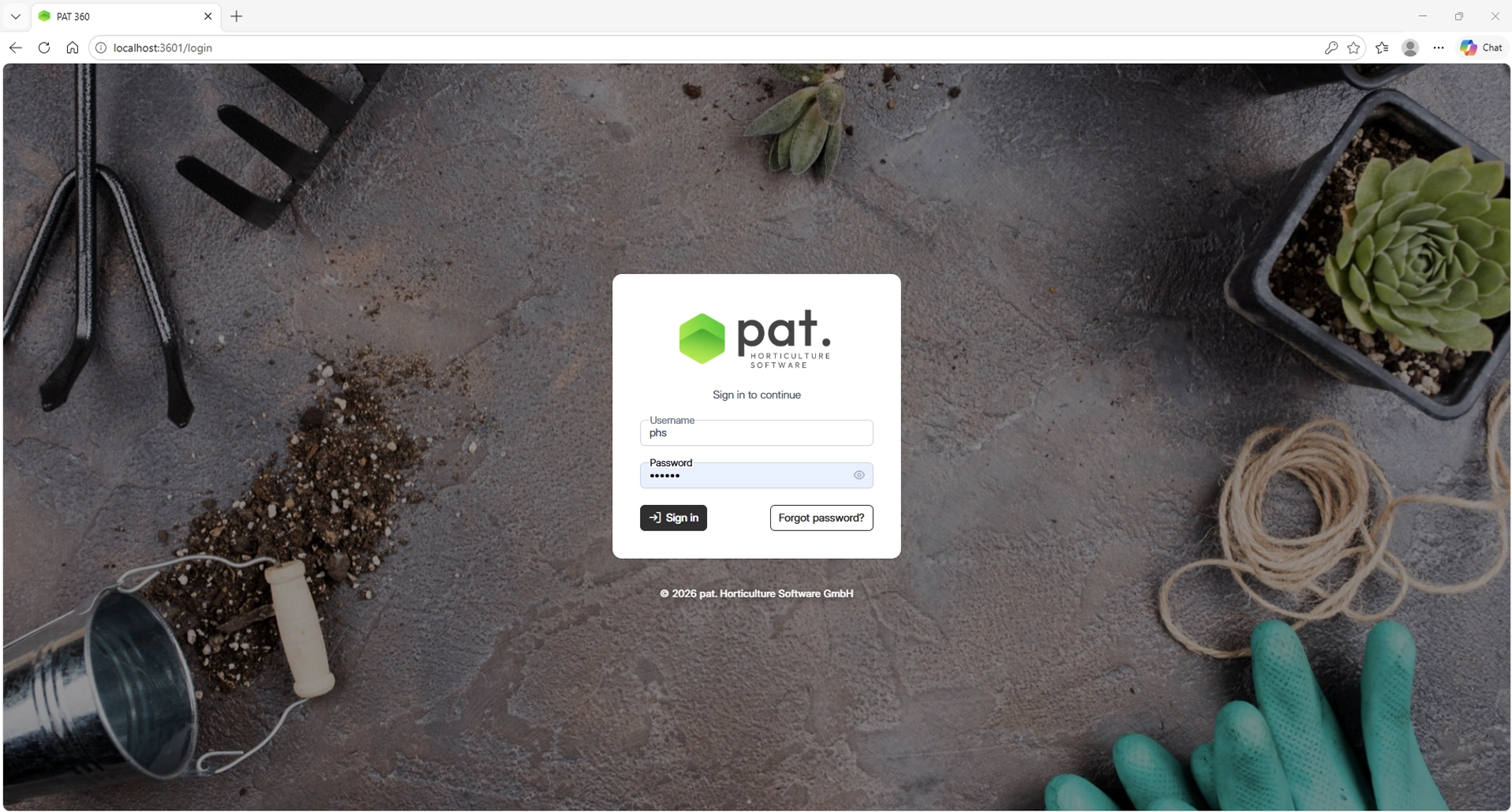
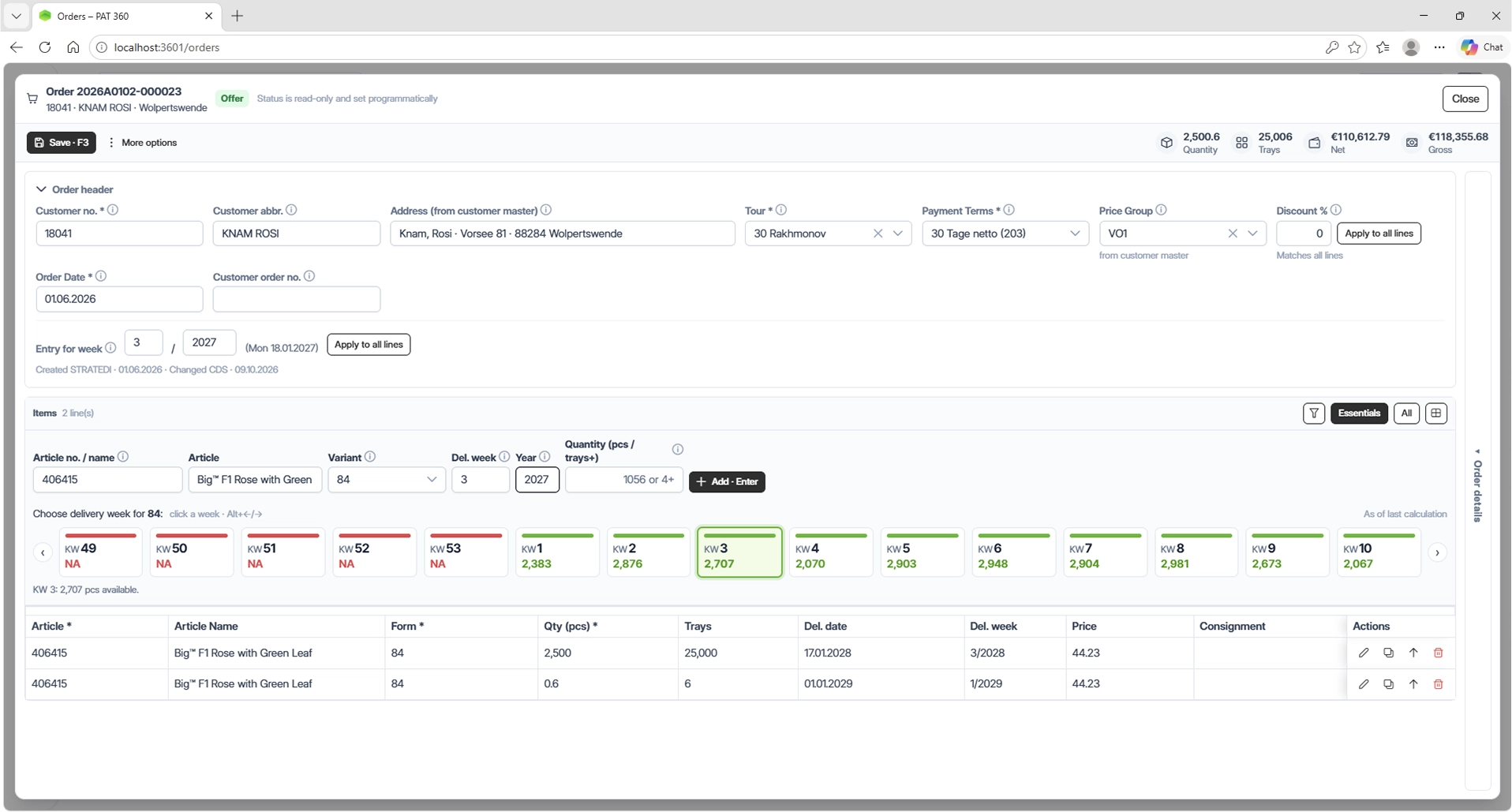
We are planning a complete relaunch of our software. Web-based, modern, with a new UI, and available as SaaS. These are the screens it grows into.
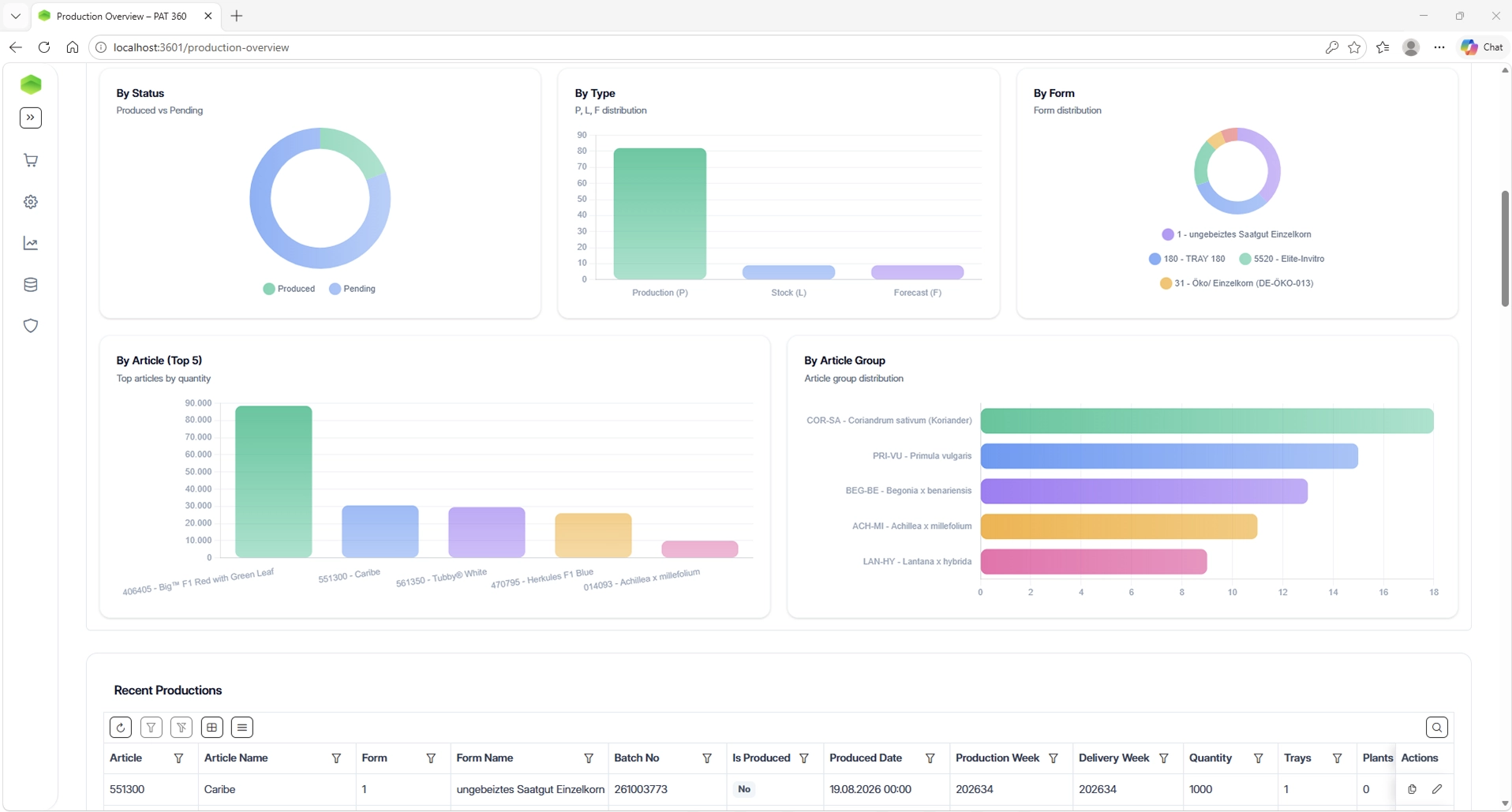
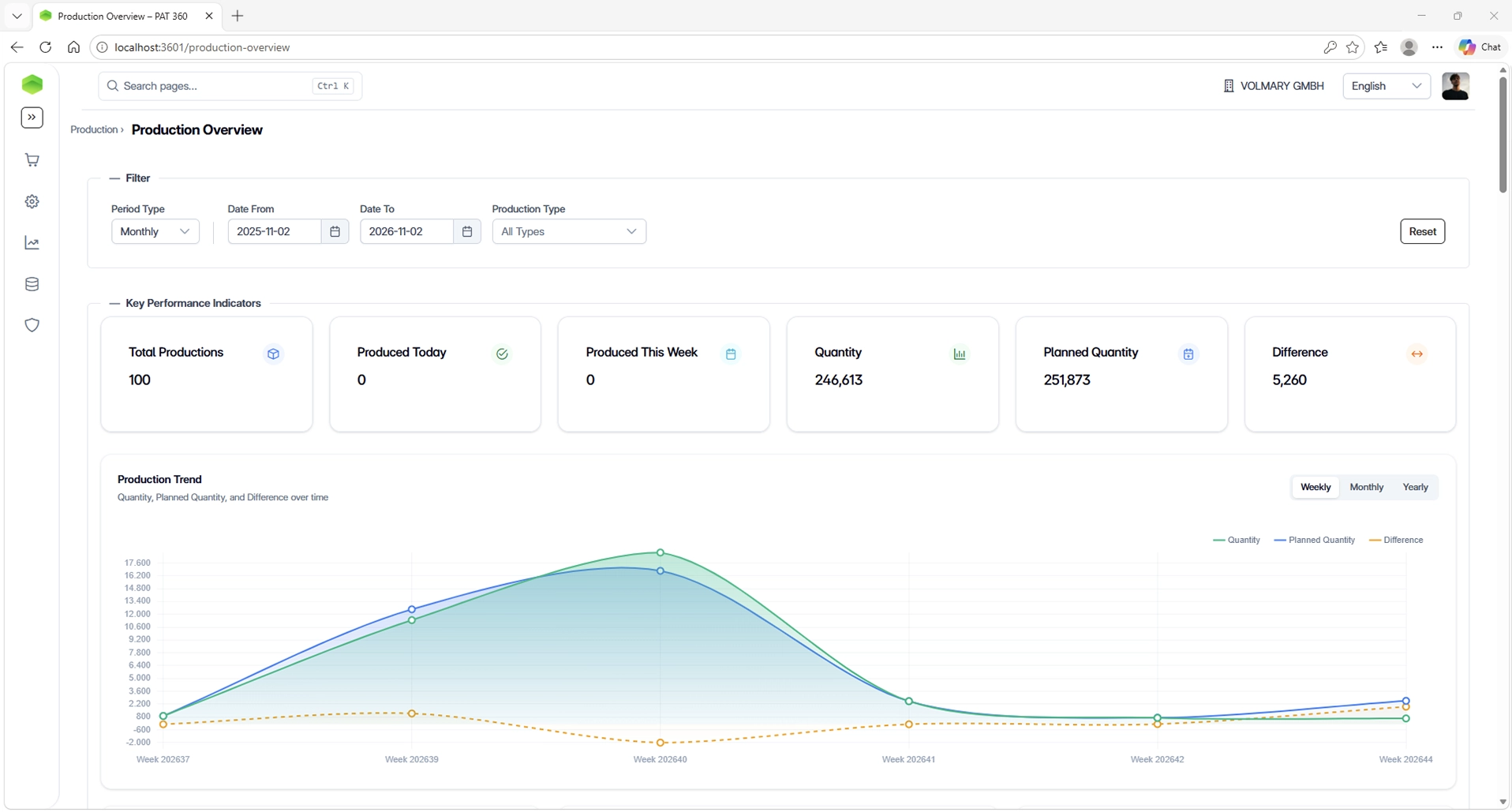
Clear charts that make production easy to read.
Every key figure of your production, live on one screen.
One login, right in the browser.
Pick the delivery week by what is really available.
questions
Are your operations ready to move beyond spreadsheets?

Answer the following questions with yes or no to quickly assess how prepared your business is for a more connected, reliable and scalable way of managing planning, availability, sales and dispatch.

0 of 10 answered
  1. 01Do you trust your availability view today?
  2. 02Do sales and production work with the same numbers?
  3. 03How often do orders change last minute?
  4. 04How much time is spent on double entry each week?
  5. 05Do dispatch errors happen because data is outdated?
  6. 06Are picking and labelling steps fully standardised?
  7. 07Can you trace batches or lots through to the customer?
  8. 08Do you rely on manual checks to prevent mistakes?
  9. 09Are reports based on consistent data sources?
  10. 10Would your team benefit from one connected flow across departments?
Talk your answers through with us.

We look at your current setup together and answer your questions.

Get a free demo
the transition
From spreadsheets to PAT in just three phases.

Moving to PAT is a structured implementation in three phases. We lay the foundation together, bring your core workflows live and then connect the rest of the business step by step, while your daily operations keep running.

  1. 12–4 weeks
    Phase 1
    Building the foundation

    Start from the day as it is. Together we map how planning, availability, dispatch and production actually run, before anything is switched off.

    • Items, customers and the way a crop is produced
    • Traceability requirements, set with the people who will use them
    • Workflows mapped while daily operations keep running
  2. 24–8 weeks
    Phase 2
    Launching the core workflows

    The team starts on the work the day already depends on. Planning, availability and order management move into the new system.

    • Availability stays on the same number as the order
    • The team starts working in the new system
    • Spreadsheets can remain where the day still needs them
  3. 34–8 weeks
    Phase 3
    Fully connected operations

    Once the core is steady, the rest joins in the same rhythm. Each piece is added while the team is already working in the system.

    • Barcode scanning joins dispatch
    • The crop stays on one connected record
    • Integrations and reporting follow as the operation evolves
The principle behind a successful transition

The system should adapt to real horticulture operations and support the way your teams already work on a daily basis, instead of forcing unrealistic or overly rigid processes.

next steps
The next step is understanding what fits your operation best.

If you want to move from spreadsheets to a more connected ERP workflow, the best starting point is understanding how your planning, availability, sales and dispatch processes work today. We’re happy to discuss your current setup, answer your questions and explore together whether PAT is the right fit for your operation.

Eleni Drosou
Sales Consultant
+43 316 4433 0464 sales@pat-horticulture.com
30+years. Since 1995, we’ve been building and evolving the digital foundation of horticulture businesses.
150+horticulture businesses across the world trust PAT. Globally active, locally connected.

    Ready to discuss your horticultureproject with our team?
    Here from satisfied clients
    “PAT Horticulture Software offers a very good balance between a standard ERP solution with customer based add-ons.”
    SASCHA LIS
    IT-MANAGER
    “After two failed ERP implementations we managed to do a company worldwide PAT implementation within one year.”
    Jeroen van Zomeren
    IM & ICT Florensis
    “We are using PAT for more than 15 years now. There are no problems with the connectivity of external programmes with tailor-made interfaces.”
    Karin Dzillum
    MANAGEMENT
    Globally active, locally connected ♥️ Trusted by over
    150 horticulture businesses across the world.
    Customer 1
    Customer 2
    Customer 3
    Customer 4
    Customer 5
    Customer 6
    Customer 7
    Customer 8
    Customer 9
    Customer 10
    Customer 1
    Customer 2
    Customer 3
    Customer 4
    Customer 5
    Customer 6
    Customer 7
    Customer 8
    Customer 9
    Customer 10
    Customer 1
    Customer 2
    Customer 3
    Customer 4
    Customer 5
    Customer 6
    Customer 7
    Customer 8
    Customer 9
    Customer 10
    Customer 1
    Customer 2
    Customer 3
    Customer 4
    Customer 5
    Customer 6
    Customer 7
    Customer 8
    Customer 9
    Customer 10